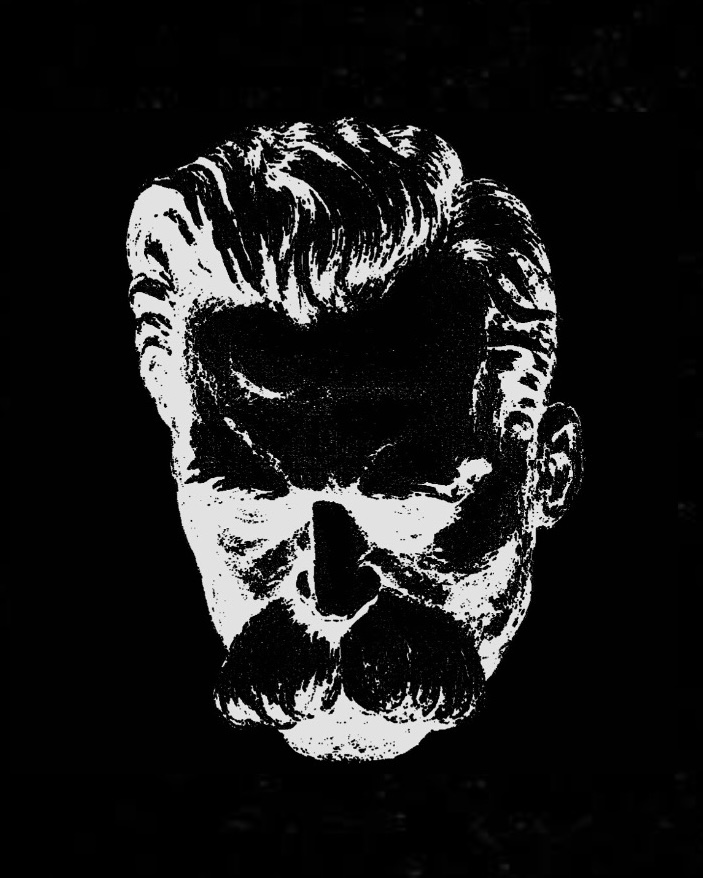
“Europe is to be found on the lips of those who dare not ask for things in their own name,” is a quote supposedly coming—at least in similar form—from Otto von Bismarck.
We are a small continent with many great powers, one that fuelled the technological and ideological advancement of the entire world, to the extent that every great power in the world is modelled upon a political system originally developed in Europe.
But, the ideological and technological superiority that paved way for European states in the early-modern and modern era to establish dominance over the world came at a high cost: the destruction of the deep culture of European peoples.
Otto von Bismarck knew that the logic of state power requires an eradication of opposition, even though he seemed to lament it at the same time. The deep state will by necessity destroy deep culture—that is, roots: a sense of origin, a shared mythology, room for individual creativity within a framework of mutual cooperation. Not even Bismarck could stop this process—he only asked us to accept the realities of life: we must not disguise our greatness but we must also accept that technology will transform everything.
Europe is in other words the result of two opposing existential forces: order, in which collaboration is the first priority, and chaos, in which subjective demands take precedence over the collective. In politics we may call them right and left, in culture tradition and creativity.
Otto von Bismarck’s words also revealed a deeper aspect of this dynamic: not only is there a conflict between order and chaos, but also the semantic conflict between outspoken demands, and demands disguised as mutual benefits.
Add the conflict between deep state and deep culture, and European power dynamics lay out in the open. As you read this, you are perhaps familiar with the Nouvelle Droit and their ambition to carve out a niche beyond the traditional categories of left and right. You are therefore probably not just a passive consumer of the products manufactured by this system, but a keen observer analysing the patterns.
In this turmoil we entered the music scene in 2016 with our first EP “100 Faces,” an introspective journey through the borderlands between deep state culture—the gigantic supermarket of identities, ideas and expectations that create our collective memory; and deep culture—the vast expanse of tradition, creativity, and integrity that make up the soul.
“Bird of prey, I walk into the park and see the hawk with silicon eyes,” we sang on that first EP. There is an entire industry dedicated to stopping all expressions of deep culture, and replace it with “supermarket culture.” The simplest acts of resilience have significant meaning in the eyes of those who steer the cash flow into their own pockets—and they will do everything in their power to make sure it keeps flowing.
In 2017, after being cancelled by deep state radio in our homeland Sweden, we set out on a musical journey that is still taking us to the most unexpected places: we decided to not back down in humility. Instead we began making music far outside of the comfort zone of the music industry.
Many albums followed, each steeped in the turmoil of our continent, and its inherent conflict between deep state and deep culture, order and chaos, tradition and creativity, openness and disguise. Otto von Bismarck keen eye followed us, and we rephrased the quote he possibly said with:
“The greater good is to be found on the lips of those who dare not ask for things in their own name.”
The rephrased quote summed up our view on art: it must originate in our own understanding of the world, not a fabricated manual from the supermarket. Our music combined everything that is Europe, without admitting ourselves to any singular faith or creed. We were free to sing as we pleased, in the footsteps of the great renegades who created the exceptionalism of our continent. We were the illuminated medieval scripts, but also the farting bunnies who sometimes appeared in the margins.
In the mix of order and chaos came tracks like “Salvini Pop,” a playful exploration of the populist wing growing in Italy, through the lens of the somewhat awkward genre Italo Disco: “See the man is dancing, nobody can stop, everybody’s dancing Salvini Pop.” It was a carefully crafted naive singalong combining pop culture with a deep wave of popular discontent.
Using the language and iconography of supermarket culture we drew a bridge across the gorge of alienation, into deep culture.
Our sincere devotion to tradition and creativity gave room for “Gospel X,” a single inspired by the first crusaders and their ambition to reconquer Jerusalem, just for the sake of honor and glory. “Why are murderers hanging, like rags from my almighty sword? Tranquil, my heart is tranquil, when I ride with the Lord,” ran part of the lyrics to a vivid EDM beat.
The solemnity of a personal quest is part of deep culture—and in that we are never alone. In struggle we bond with ourselves.
A dive into deep psychology took us across the river Styx for our latest, 5th album: the dark and terrifying dive into psychopathy, nihilism and sadism of the album “Black River Butcher,” descending into garage rock on tracks like Mama Liz: “Is she gonna see your funeral? Is she gonna play the mourning widow?”
The distasteful hunt for gold by a black widow can only be thoroughly portrayed by deep culture. In a world where deception runs wild—and the dark triad of deviant psychology is elevated to norm—we cannot use the lingua franca. Over the years we have departed from using supermarket culture references, instead moving in a more introverted direction, encouraging listeners to dig deeper.
In the same manner we have covered the COVID pandemic, the oil wars, the surveillance state, fidelity, passion, crime, rebellion, and love as a commitment beyond death. European spirituality is rooted in the idea of venturing into terra incognita and carry with us the seed of traditions and myths that created the content of our souls.
European deep culture is not a blind collective following a set of tenets—but an individual choice, every second of our lives, to merge tradition and creativity into a whole. Such were the viking ships built, such were the great cathedrals built, such is our music built. It was never indended to be an infinite copy-paste of dead masters.
Just like Otto von Bismarck, we evade all simple categories—because we exist for our own sake, like Germany under Bismarck made her demands openly instead of pretending it was for the benefit of all. There is an honesty to that.
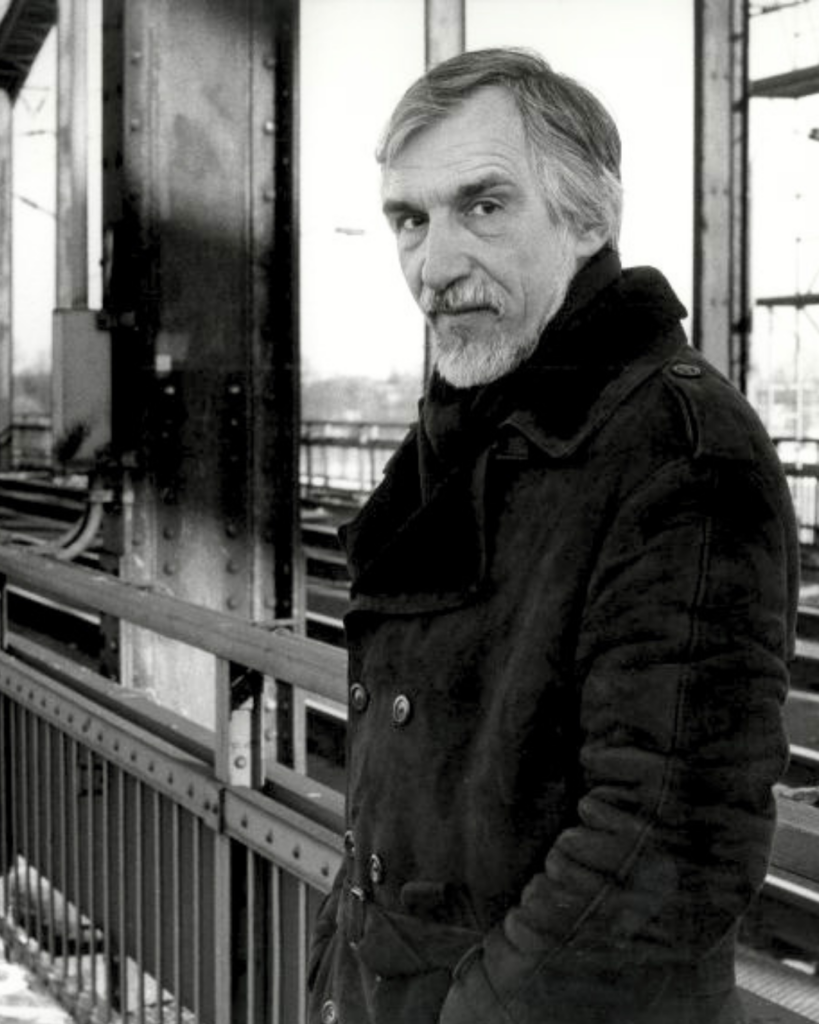
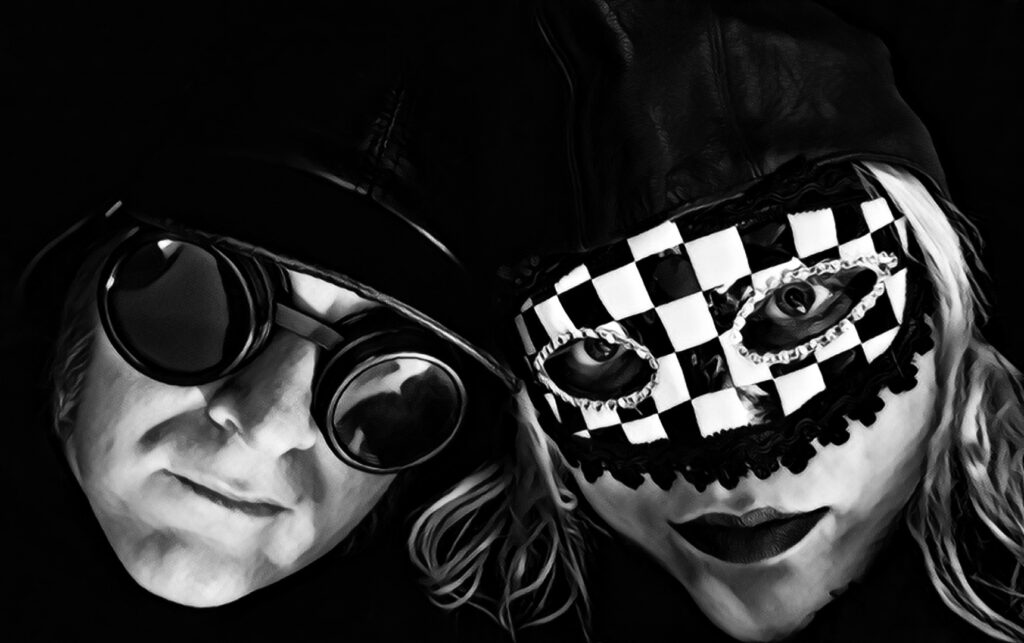
Our female vocalist Lilou is the narrator of our songs. Her dark alto voice intimidates—it feels weird, a word stemming from old Norse wyrd, the weave of fate and choice, associated with the Völva. She is a woman of great force, because a culture without strong women is doomed. Submissive women raise submissive children.
Our male lyricist John—also the husband of Lilou—was born into a dysfunctional half-Marx, half-Mises family. A staunch nerd, his burning passion for poetry in the likes of Ezra Pound, Friedrich Nietzsche, Charles Bukowski, and the Edda, is visible in our work.
Together we embody a motion far beyond the established categories, and we are convinced that any awakening of European spirituality to emerge on a wider scale than a few enthusiasts, must transcend the old borderland between order and chaos, tradition and creativity—because creativity alone is an obsessive TikTok content creator, while tradition alone is a necropolis of dead art.
Otto von Bismarck knew the devastating power and destruction unleashed by modern artillery—the utmost sign of state power—but he also knew that nothing could ever make them disappear. It all came down to one simple choice: am I going to use this cannon to pursuit my goals, rooted in our tradition; or am I going to be blown to bits by this cannon, by somebody else pursuing his goals—while pretending that my refusal to use this creative tool is for the greater good?
Culture is that simple.